Aussie dollar--jumping kangaroo or paper kangaroo?
-
If Oz want to accmulates more fiscal reserve,
the first thing to dump is the two or three VIP planes.
This is one of the many reasons why oz has reserve of US$40 b only,
and SG well over US$200 b.THAT IS few % of Oz GDP
and well over 100% SG GDP respectively!!
Poor SG PM took C 130 and 747 Rudd took VIP plane Boeing 737.
....

http://www.sgforums.com/forums/1164/topics/231507
Why PM took C130 to Cebu last Military Nuts

read ytd postings.
-
Hello lionnoisy, believe this:
Tamasek makes MASSIVE LOSS
SINGAPORE, Nov 4 — Last month's market upheaval swept away S$16.4 billion (RM40 billion) in market value from Temasek Holdings’ portfolio of major investments in Singapore-listed companies alone.
Calculations, based on the shrunken market capitalisation of 12 companies Temasek has a significant stake in, show that the value of its investments fell 25.7 per cent between Sept 30 and Oct 31. Compared to the beginning of the year, the drop is 45.7 per cent, or S$40 billion.
Singapore’s stock market capitalisation plunged S$123.5 billion in the month of October.
Temasek saw a huge chunk of market value destroyed — on paper — from its 55 per cent stake in SingTel, which translated into S$7.1 billion getting sliced off its portfolio's value in the month of October. The value of its SingTel stake fell S$13.7 billion from Dec 31, 2007.
Its 29 per cent core interest in DBS Group meant that the bank contributed the second largest cut in value to Temasek's Singapore portfolio — S$2.4 billion over the course of last month. DBS had borne the brunt of the sell-off among the three local banking stocks in October, losing 34 per cent of its market cap.
Temasek's 54 per cent share in Singapore Airlines' market cap dipped S$2 billion in the month of October, and S$4 billion this year so far. Its other transportation and logistics investments saw market value shrink too. Temasek's stake in SMRT Corporation meant a loss in market value of S$360 million, while the value of its interest in Neptune Orient Lines fell by S$563 million.
Market cap fell for the three infrastructure, industrial and engineering stocks with Temasek interest too.
Temasek's share of ST Engineering, Sembcorp Industries and Keppel Corporation's market value losses last month came to S$584 million, S$726 million and S$1.1 billion respectively.
Technology stocks Chartered Semiconductor Manufacturing and STATS ChipPAC meant value cuts for Temasek of S$232 million and S$776 million respectively in October too. Its comparatively smaller 15 per cent stake in Fraser and Neave still led to a loss in value of S$171 million last month.
CapitaLand was not hit as badly in October, so Temasek's 40 per cent interest in it led to a loss of S$237 million, though for the year so far, the property developer has taken S$3.8 billion off Temasek's portfolio.
Geographically, Singapore accounts for about a third of Temasek's net portfolio value.
It maintains a 12 per cent portfolio exposure to Asean countries, 22 per cent to North Asia, 23 per cent to the OECD economies, and a 7 per cent exposure to emerging South Asian economies such as India and Pakistan. -
Also lionnoisy
how come LKY wife sick
instead of C130 military medical transport
they charter SIA flight to take her back?
is this acceptable?
-
SG, well over 200 B reserves?
Then this happen:
Singapore’s healthcare system - uniquely Singapore? F1 or F9? (Part 1)
Friday, 18 May 2007, 3:00 am | 1,094 views
 By Leong Sze Hian
This is part one of a three-parts chronological treatise on healthcare issues over the last 2 years or so, like means-testing, non-priority for subsidised rates healthcare, wards down-grading, medical fees competition, costs of medicines and alternatives, healthcare spending, MediShield, ElderShield, implications for foreigners, PRs and Singaporeans, etc.
What will the future of healthcare be like for Singaporeans? What are some issues that we may need to be concerned with? What are your fears? What sort of healthcare system do you want? How do we compare with other countries?
Here are the first 3 issues with our healthcare system.
F1. May 2007 - REVERSE MEANS-TESTING:
 I went to the Travellers’ Health and Vaccination Clinic at Tan Tock Seng Hospital for a Yellow Fever vaccination recently. The charge was $130.20, compared to just $15 for the same vaccination I had at the same clinic 10 years ago. This is an increase of 768 per cent or a 24 per cent compounded increase per annum.
The clinic was furnished lavishly with leather sofas, leather chairs, paintings on the walls, flowers in vases, etc, like a five-star hotel. The same vaccination costs about HK$200 (S$39), A$50 (S$63) and 35 euros (S$72) in Hong Kong, Australia and Ireland, respectively.
Why has the cost of vaccination increased by so much over the last 10 years, when inflation in Singapore was less than 2 per cent per annum?
When I paid the $130.20 fee, the staff gave me a brochure and said that if I had a platinum credit card, I would receive a 12 per cent discount for health screening.
Why do the more affluent who qualify for a platinum card get a discount of 12 per cent, whereas the lower income have to pay 13.6 per cent more, in a government restructured hospital?
Is this not, in a way, like reverse means testing - the rich pay less, the poor pay more?
F2. April 2007 - ELDERSHIELD:
 The MOH has announced that the two insurers of ElderShield will give a one-time rebate to policyholders because of low claims relative to the premiums collected, since the scheme started.
Why pay a rebate, and increase premiums at the same time? Why not just use the excess funding accumulated to reduce future premiums or increase benefits?
At the end of last year, there were about 750,000 policyholders, with a total of 2,366 successful claims. About 16 per cent of claims declined. The claims payout last year was about $8.5 million (2,366 claims x $300 monthly x 12 months).
Even if we assume all 750,000 policyholders paid the lowest premiums at age 40 of $169.74 (male $148.84 + female $190.63 divided by 2), premiums per year were $127.3 million ($169.74 x 750,000 policyholders).
This means the claims ratio was only about 6.7 per cent ($8.5 million in claims but $127.3 million in premiums).
As the 2,366 claims were the cumulative total for the four years since the scheme started, the claims payout over premiums per year is actually much lower.
What was the claims ratio for each of the four years of the scheme? I believe this may be the most profitable insurance scheme in the history of insurance in any country.
How much profit has been made since the scheme started?
Notwithstanding the proposal to increase the monthly payout by $100 and the payout period from five to six years, in view of the above, how is it possible that the proposal now is to have existing policyholders pay a one-off adjustment to make up for lower premiums paid in earlier years under the current ElderShield scheme, increase premiums of about $10 a month for the older age group, and have policyholders registered automatically for the new scheme after September pay premiums of $1 to $2 more a month?
As to the opt-out rate having gone down steadily from 38 per cent when the scheme was launched to 14 per cent last year, there are 1.26 million residents (Singaporeans and PRs) aged 40 to 64, according to the Department of Statistics’ ‘key statistics demography Singapore residents by age group end June 2006′.
So, isn’t the opt-out rate about 40 per cent (with about 750,000 policyholders among 1.26 million residents)?
Does the Ministry of Health’s study on the opt-out rate refer to the current opt-out rate of new entrants who reach age 40, or the overall opt-out rate of those eligible?
F3. April 2007 - HOSPITAL WARDS DOWNGRADING:
 The Health Minister clarified in Parliament on April 10 that downgrading to subsidised wards is a two-day process and his plans to introduce means testing in hospitals within a year.
Some Singaporeans who can afford higher class wards might be reluctant to opt for them, fearing that their hospital stay might be prolonged due to unexpected complications and the charges incurred might exceed their Medisave account balance, medical insurance and cash reserves.
Thus, higher-income Singaporeans might opt for Class C or B2 subsidised wards if, for example, they believe that they could be required to stay in hospital for longer than, say, five days. The logic is that if it’s five days or less, they might think that they can afford the luxury of higher class ward facilities. But, since there is always the possibility of them staying for an indefinite period, they might think it is better not to risk opting for a higher class ward.
Now that this worry is being exacerbated by means testing, the problem of overcrowding in Class C wards may get worse.
In any case, when the Class C or B2 ward is full, one can go to a higher class ward and still pay the lower rates. So, why risk opting for a higher class ward in the first place?
In this regard, I would like to suggest that patients and their families be assured that if they opt for a higher class ward, and end up staying for much longer than expected, such as over three weeks, they will automatically be allowed to downgrade to C class or B2.
This may result in fewer people opting for C class or B2 on admission to the hospital.
 Currently, those who opt for a higher class ward, and subsequently request for downgrading, are subject to means testing — this I believe is what Singaporeans fear most. Thus, this may be the root cause for many patients opting for subsidised wards.
It was clarified in Parliament that it takes two days or longer to process a ward-downgrading request, if patients are unable to produce the relevant documents to support their applications when means-testing is involved.
Only those with a per capita family income of $1,000 a month or lower can downgrade to Class B2, and $500 or lower to Class C. For outpatients applying to downgrade, it takes an average of two weeks to secure an appointment with a medical social worker to assess whether the patient qualifies.
So, for say a three-person family with a household income of just $1,501 a month, downgrading to Class C is not allowed. Only 1 per cent of patients in Class A or B1 wards who sought to downgrade were successful.
Judging from this, no wonder Singaporeans are opting for lower-class wards — due to the fear of not being able to downgrade.
-
money go where lionnoisy?
when to use? after they die?
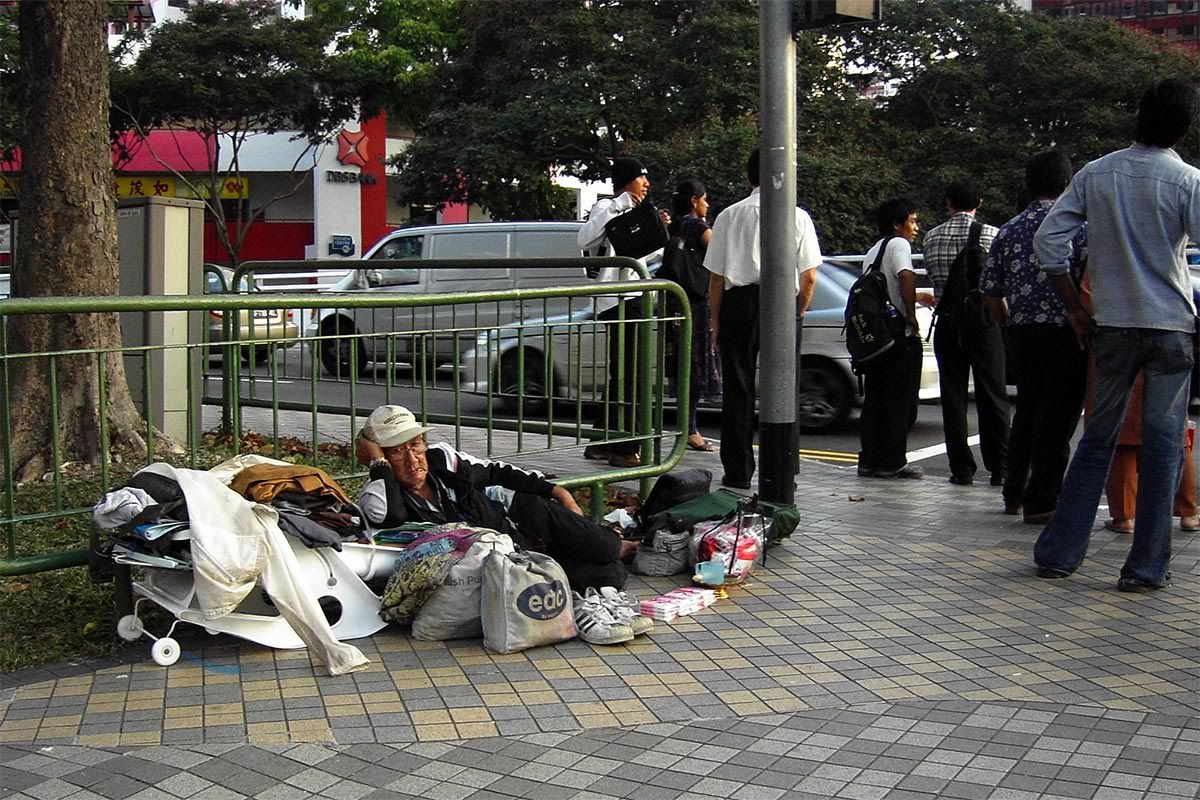
The Poor and Social Reality in Singapore
<!--/adcode-->Does it mean that because we are educated that we think that people are merely lazy? Or do we think we have done our job just because we have policies* available to help the people? It is one thing to have policies, it is another to have enough people to implement them effectively. It is one thing to be educated, it is another to think that every Singaporeans have the same opportunity as you to be educated.
As James Scott argues, I paraphase, Let’s not conflate state’s policies with the actual social reality and implementation on the ground. Wise words indeed.
Help for the poor: So close, yet so far
By Vivi Zainol, For The Straits Times
WHY do needy Singaporeans continue to fall through the cracks despite the Government’s array of public aid schemes?
To tackle this question, 18 of my students at Ngee Ann Polytechnic interviewed more than 30 low-income households for a vacation module. They found the biggest barriers to be education and language.
Many are illiterate. With little knowledge or understanding of schemes to help them, it’s not surprising that some say they know the Government is helping them, but they feel it is not doing enough.
Some would rather get an extra job than ask for help. Others struggle to make themselves understood and say they do not have the time, money or energy to make return trips to their MP or Community Development Councils (CDCs) to ask for more help.
For those who did bother, a common complaint heard by students was that the CDC officers are rude.
Several years ago, as a Straits Times community reporter, I had heard the same comment when I asked a woman with three children, and whose husband was in jail for a drug offence, why she did not ask for help. Describing how her experience with CDCs turned her off, she said a CDC officer had sarcastically asked her: ‘Didn’t your husband leave you any money?’
‘If he had, why would I be asking for help?’ said the troubled woman, who had contemplated suicide.
One group of Ngee Ann students decided to observe CDC officers in action after receiving the feedback. At one CDC, officers were unfailingly polite - it was the low-income group which was being demanding and uncooperative. However, all the CDC officers were Chinese - help-seekers speaking Malay and Indian had to struggle to make themselves understood.
At another CDC, student Nurlina Fatima Shafrin, 18, recalled how a CDC officer was heard commenting loudly to another officer nearby on how ‘irritating’ the people who had come to ask for help were, even when the latter, who were filling up forms, could hear them.
What is interesting to note is that interviews by students uncovered a perception among low-income earners that the higher-educated tend to look down on them and are arrogant. Formally attired CDC officers also unintentionally give the impression that they are less approachable.
Not all CDC officers are trained social workers - there are not enough social workers to go around in Singapore.
Also, some members of the low-income group can be downright prickly, believing they have a right to receive handouts from the state.
But surely everybody deserves good customer service regardless of income group? The poor have their pride too.
Could CDCs perhaps train their staff to understand the sensitivities and psyche of the lower-income group? Steps could also be taken to ensure that staff on duty speak different languages and dialects. Members from the low-income group could even be employed to help.
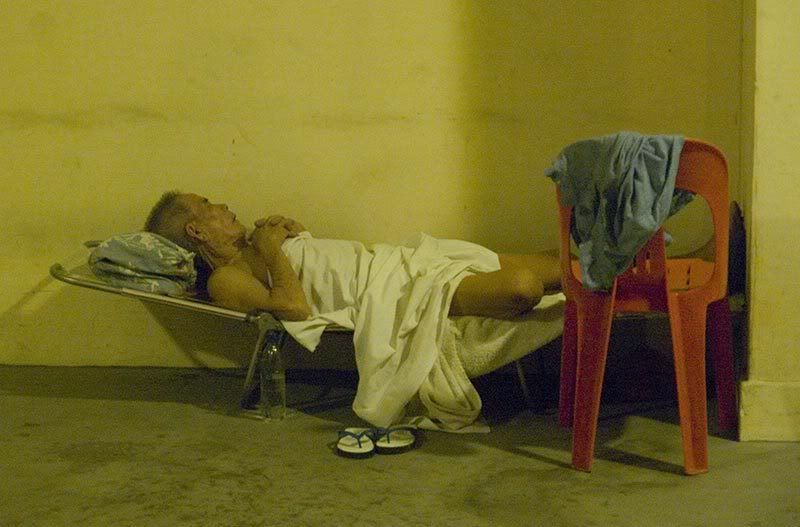


It’s good news indeed to hear that the Government has raised public assistance spending from $96 million to $140 million, and ComCare funding from $43 million to $67 million. With that much money allocated to the needy, it makes sense to ensure these funds reach the ones who need immediate assistance.
Take Mr Ramasamy Ratran, a 52-year-old Indian man, who was a pitiful sight when my students and I chanced upon him. He was lying on the dusty floor in his rented two-room flat, having been discharged from hospital just two weeks earlier.
Fortunately, a former female neighbour and a male friend had taken it upon themselves to look after Mr Ramasamy, who is epileptic and living on his own. Medical social workers had settled his hospital bills, but he was getting no financial help while he was recuperating and unable to work.
‘Can you please help him? He needs help. When I first came two weeks ago, there was no electricity. His flat was in total darkness,’ pleaded the former neighbour, who had helped to top up his prepaid utilities smart key to get the electricity back on.
Mr Ramasamy was not the only one my students and I found in need of assistance. When barber Yahya Pinghani, 39, was hospitalised for a kidney problem, he could not work and had no daily income for weeks. His children skipped school that week because there was no money for the bus fare.
Mr Pinghani’s wife Murni, 41, complained how, after three weeks, her single friend who had applied for help with her at a CDC had already received assistance while she and her family were still waiting. She revealed that her family owed a whopping $4,000 in utilities bills.
CDCs do give $200 once-off emergency assistance, after which the needy wait six to eight weeks for CDCs to respond. So what do they do when help is a long time coming? Many see their MPs, getting a $50 cheque for their trouble, or resort to collecting food from voluntary welfare organisations. How many know that they can get immediate assistance from your Citizens Consultative Committee? I did not either, for that matter, till I asked around.
Perhaps it is time that bulletin boards in HDB flats were put to better use. They could advertise where the poor can get help and give details of the schemes. Many low-income earners are illiterate, but the ones who are not will surely help to spread the word around.
It could also be made mandatory for medical social workers in hospitals to inform social workers or CDCs when a person who is from the low-income group is discharged so they will give him temporary financial assistance during his recovery period.
Last year, the Ministry of Community Development, Youth and Sports (MCYS) set up a community care network for the elderly in Ang Mo Kio. Under this scheme, grassroots leaders are trained by family service centres to identify needy households.
Perhaps if this outreach scheme is formally extended to include all needy Singaporeans, not just the elderly, it could be used to ensure no one falls through the cracks and to explain the help schemes available to the needy.
MCYS minister Vivian Balakrishnan recently called on Singaporeans to be eyes and ears on the ground, saying ‘we need the whole of society’ and not ‘an army of bureaucratic civil servants’, when he outlined $140 million worth of initiatives for the low-income group.
The findings of the 18 Ngee Ann polytechnic students who ventured out of their classroom may not be conclusive, but simple observations like theirs should not be belittled. Like any jigsaw puzzle enthusiast will tell you, even one small piece makes a difference.
The writer is a lecturer at the School of Interdisciplinary Studies at Ngee Ann Polytechnic.

How much of the $200B he get? $2?
wake up lah!
-

-
DBS to cut 900 jobsLayoffs will be across all levels, mostly in S'pore and Hong Kong
 PHOTO: AROLINE CHIA
 THE axe has started falling in corporate Singapore with DBS Group Holdings announcing sharp job cuts yesterday that will see 900 workers - or 6 per cent of its staff - gone by Christmas.
Slightly over half will be from Singapore, the bank said.
The shock news came on a day when DBS reported its steepest profit fall in two years and amid controversy over investments it sold which are now worthless.
There are also growing fears that the cuts are just the first in what could be a stream of job losses as blue chip firms and small operations scale back in the face of the economic slowdown.
The bank announced the cuts at a town hall meeting of more than 1,000 employees at Suntec City and via video link to about 500 workers from other units, including Hong Kong, Indonesia and China.
It said the layoffs are part of plans to streamline and restructure the giant banking group, which, like many around the world, is battling the effects of a financial sector crisis.
Most of the affected DBS employees will be from the Singapore and Hong Kong units with all divisions and all levels of seniority affected. DBS employs about 7,600 staff here and 4,200 in Hong Kong.
DBS sources said the IT department, backroom operations and frontline service staff are likely to feel the most pain from the cuts.
Recruiters like Mr Gary Lai, front office banking manager of search firm Robert Walters, think the consumer banking division could also take a hit since DBS 'has been aggressively expanding over the last few years' on that front.
The staff cuts are the largest since 2001, when DBS slashed 700 jobs or 5 per cent of its total staff. About 200 Singapore employees were let go then.
DBS chief executive Richard Stanley told a briefing yesterday that the staff earmarked to go have yet to be told.
'This is a painful decision for DBS, and for me personally, but something we've had to bite the bullet and do in a difficult environment,' said Mr Stanley, who took over the helm in May.
The move to restructure and streamline the group may not be 'popular', but needs to be done in order to be more productive and efficient, he said.
'To be a more streamlined organisation, we must run a tighter ship.'
He also said the layoffs were not a reflection of the bank's financial position.
'DBS remains strong and sound,' he said, adding that the extent of cost savings will only be reported in the next quarter.
Details of the compensation package were not revealed but it is expected to be in line with the market standard of a month's salary for each year of service.
Mr Stanley would not say if the cuts will also affect employees at POSB.
Some DBS employees told The Straits Times that they were 'quite prepared' for the layoffs as foreign banks such as Merrill Lynch, Standard Chartered and UBS had already been cutting jobs here.
But others had thought that Mr Stanley, a genial banker often described as a 'people person', would not resort to job cuts in a bid to increase efficiency.
Ms Nora Kang, president of the DBS Staff Union, said that the union will 'walk through this journey with all affected members' to ensure a smooth transition.
She added that the union had approached the NTUC's training institute to develop suitable training programmes for members.
Mr Stanley stressed yesterday that the 'restructuring exercise' was not related to the alleged mis-selling of products linked to now-bankrupt US investment bank Lehman Brothers.
CIMB-GK economist Song Seng Wun said the DBS layoffs are only the beginning and that the real economy will be hit with unemployment across all sectors - from hospitality-related services to manufacturing - and not just finance.
'If you talk about a global slowdown, the demand for all goods and services will drop, and it's going to hit all jobs hard,' Mr Song said.
Still, Singapore's deputy labour chief Heng Chee How maintained yesterday that retrenchments would remain relatively low this year at about 10,000 jobs.
'That is because this recession has just started towards the end of the year, so we think that the unemployment and retrenchment numbers will go up next year,' he told Channel News Asia.
He added that some companies are also going for reduced hours to cut costs and that it is now even more crucial to ramp up retraining.
-
Hi Sg Ty
Dunt waste time and effoert on me.
Spend some time contributing to this forum.
What have u done for this forum recently,BTW,beside making
fun on me?Forumers here can improve themselves
just by reading your funny images!!
@@@@@@@@@@@@@
Take some time to think for possible road of Oz dollars.
............
Merrill says $50 billion of the $285 billion has already matured or been refinanced, with a further $6 billion due to be refinanced before the end of the year.
Beyond that, over the next 24 months $76 billion is expected to be refinanced, with the bulk to come through in calendar 2010.
"Given the current state of credit markets, the question is the extent to which banks will be positioned to continue to extend credit to these corporates as the debt matures," Merrill says.
It points out that one bank can upset an entire syndicate.
Local turmoil should offshore banks head home
Richard Gluyas | November 15, 2008
@@@@@@@@@@@@
Oz Reserve Bank cannot defend Oz $$ for long time,
due to lack of ammo.
SG MAS which have set aside billions of ammo
to defend SGP.The fight to win mind set and ammo are
well in place in MAS.It is reported that during this
bad time,some guys have to stand by in MAS during weekend.
I dunt know much in RBA.
NO MONEY.NO TALK.
Pl read their weekly
14 November 2008
Statement of Liabilities and Assetsto see how RBA give out cash to banks etc and pocket trash--commerical papers,falling security etc!!The sudden increase of assets(ie trash) is not a good news.,,,,
-
Hi lionnoisy,
we not wasting time and effort on you
it is not only fun, we exposing your craps for all the world to see.
must really thank you for giving us so much entertainment in here
You still haven't answered:
How come you said this:
NO OTHER RIFLE COME WITH AirBursting,even for crew served
weapons!!
What is your answer given all the replies given to that?
Don't avoid the question, were your right or wrong to say that only STK comes up with air bursting munitions?
To recap:
The first in the world.
SAR 21 40mm laser-rangefinder Low Velocity
AirBursting self-destruct Grenade Launcher''
(SAR 40 Laser LV ABM GL)
For this new version,i think it is single shot.
compare with the SAR 21 40 GL (single shot)i posted on 21.06.2008.
http://www.sgforums.com/forums/1164/topics/213732
I can say this function can win over other rifles!!
NO OTHER RIFLE COME WITH AirBursting,even for crew served
weapons!!
WRONG
This is not first in the world, nor does it win over other rifles:
In fact it lose
Other air bursting GL rifles and weapons:
Mk 47 Stryker ,both not from ST and can using ABM.
FN2000 is dual caliber already in mass production and can use israeli ABM, Mk 47 already use in combat in Afganistan and can use ABM
So,the next step,among other things,is already done and make worked... Mk 47 Stryker USED in combat and FN2000 is already able to use ABM and in production long before STK ABM.


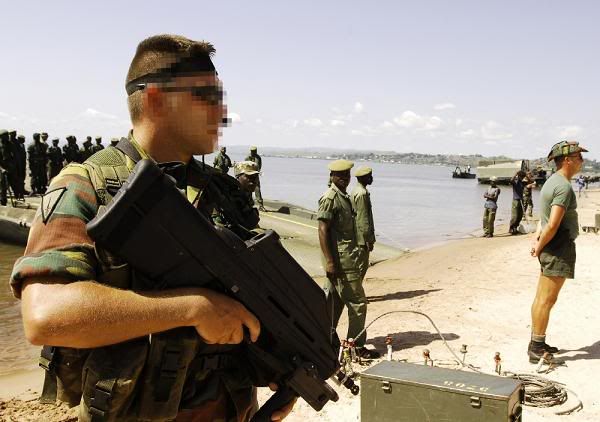

FN2000 already introduced in 2001, mass production long time ago.
FN2000 dual caliber, but 5.56mm rifle sldo more powerful then SSW small 5.7mm PDW.
MK 47 Stryker is AGL that can fire ABM, already use in combat!

-
STK NOT FIRST IN WORLD
- How lionnoisy? Want more examples?
How about the Israeli IMI MPRS system?

At Eurosatory 2006 IMI is demonstrating the progress of its Multi-Purpose Rifle System (MPRS) with the new ORION customized sight, designed to provide a ready to use, improved lethality system, utilizing standard assault rifles, advanced 40mm air-burst grenades and standard 5.56mm ammunition. Since its first introduction in 2004 the system passed several important milestones. In the coming months it is scheduled to complete type classification for the Israel Defense Forces, supporting squad level weapon systems.
MPRS uses the new ORION customized fire control and sighting system providing navigation, target acquisition, ranging, ballistic computation, ammunition interface as well as day and night capability in a single, compact 600 gr system. The MPRS can be applied to most assault weapons such as Tavor, M4, SA80, INSAS, FAMAS or any other weapon using a standard Picatiny rail.
The IMI Air Burst Ammunition is configured as a rifle grenade, a 40mm grenade for M203/AG-36 and other grenade launchers, as well as in non-lethal and intelligence applications variants below.
Embedded in a C3 system based on IMI's Warrior Compact Targetor (WACT), MPRS facilitates advanced sensor to shooter capabilities for small task forces.
Airburst 40 mm ammunition
The MPRS enables warfighters to use IMI's new 40mm air-burst grenades, at high precision, facilitating an overhead, "around the corner" or "within a window" fire for effect. When associated with IMI's new time-fused, air-burst 40mm grenades, MPRS uses a built-in communications device to set the grenade's programmable fuze to explode the grenade at the required distance and height above the target or around a corner, to achieve the desired air-burst effect.
Reconnaissance Grenade (Over the Hill)
While the 40mm high explosive airburst grenade is primary ammunition for the MPRS, the system will also incorporate other munition types, including non lethal grenades and an expendable camera fitted to a reconnaissance grenade. The grenade is fired through a ballistic trajectory toward the target, transmitting images of the target through its descent. IMI is cooperating with Israel Aircraft Industries MLM division to develop a command and control system which will be based on MPRS elements and establish effective management and control of infantry units. The system will interface with the warfighter's fire control systems, day/night observation systems (such as binoculars and recce grenades) and personal role radios.
STK NOT FIRST IN WORLD
also:
you said this:
5. M 777 cannot be deployed by Chinook
How you going to answer to all these pictures?


lol you still haven't answered
are you scared?
i think everybody can see that you are:


-
-
hi Sg Ty
all MODs must be your drinking buddy.
They choose not to seen u posting rilfes and guns in this thread.
can u remove irrelevant items in 24 hours.
just a gentle reminder.U are killing this forum softly...
@@@@@@@@@@@@
tell your family Oz rate will be cut between 50 to 75 bp!!
RBA deepened rate cut on the day
read the official and original news and data.
Dunt copy and paste.the web is full of fakes!!
18 November 2008
Minutes of November 2008 Monetary Policy Meeting of Reserve Bank Board,Oz RBA
-
Read para 2 for one more confirmation--by oz papaer!!
Also ,M 777 is not heli portable!!
Hmmm...
Let's see:




-
how lionnoisy...
no answers to all this?
-
wth, 27 pages?
-
money go where lionnoisy?
when to use? after they die?
The Poor and Social Reality in Singapore
<!--/adcode-->Does it mean that because we are educated that we think that people are merely lazy? Or do we think we have done our job just because we have policies* available to help the people? It is one thing to have policies, it is another to have enough people to implement them effectively. It is one thing to be educated, it is another to think that every Singaporeans have the same opportunity as you to be educated.
As James Scott argues, I paraphase, Let’s not conflate state’s policies with the actual social reality and implementation on the ground. Wise words indeed.
Help for the poor: So close, yet so far
By Vivi Zainol, For The Straits Times
WHY do needy Singaporeans continue to fall through the cracks despite the Government’s array of public aid schemes?
To tackle this question, 18 of my students at Ngee Ann Polytechnic interviewed more than 30 low-income households for a vacation module. They found the biggest barriers to be education and language.
Many are illiterate. With little knowledge or understanding of schemes to help them, it’s not surprising that some say they know the Government is helping them, but they feel it is not doing enough.
Some would rather get an extra job than ask for help. Others struggle to make themselves understood and say they do not have the time, money or energy to make return trips to their MP or Community Development Councils (CDCs) to ask for more help.
For those who did bother, a common complaint heard by students was that the CDC officers are rude.
Several years ago, as a Straits Times community reporter, I had heard the same comment when I asked a woman with three children, and whose husband was in jail for a drug offence, why she did not ask for help. Describing how her experience with CDCs turned her off, she said a CDC officer had sarcastically asked her: ‘Didn’t your husband leave you any money?’
‘If he had, why would I be asking for help?’ said the troubled woman, who had contemplated suicide.
One group of Ngee Ann students decided to observe CDC officers in action after receiving the feedback. At one CDC, officers were unfailingly polite - it was the low-income group which was being demanding and uncooperative. However, all the CDC officers were Chinese - help-seekers speaking Malay and Indian had to struggle to make themselves understood.
At another CDC, student Nurlina Fatima Shafrin, 18, recalled how a CDC officer was heard commenting loudly to another officer nearby on how ‘irritating’ the people who had come to ask for help were, even when the latter, who were filling up forms, could hear them.
What is interesting to note is that interviews by students uncovered a perception among low-income earners that the higher-educated tend to look down on them and are arrogant. Formally attired CDC officers also unintentionally give the impression that they are less approachable.
Not all CDC officers are trained social workers - there are not enough social workers to go around in Singapore.
Also, some members of the low-income group can be downright prickly, believing they have a right to receive handouts from the state.
But surely everybody deserves good customer service regardless of income group? The poor have their pride too.
Could CDCs perhaps train their staff to understand the sensitivities and psyche of the lower-income group? Steps could also be taken to ensure that staff on duty speak different languages and dialects. Members from the low-income group could even be employed to help.
It’s good news indeed to hear that the Government has raised public assistance spending from $96 million to $140 million, and ComCare funding from $43 million to $67 million. With that much money allocated to the needy, it makes sense to ensure these funds reach the ones who need immediate assistance.
Take Mr Ramasamy Ratran, a 52-year-old Indian man, who was a pitiful sight when my students and I chanced upon him. He was lying on the dusty floor in his rented two-room flat, having been discharged from hospital just two weeks earlier.
Fortunately, a former female neighbour and a male friend had taken it upon themselves to look after Mr Ramasamy, who is epileptic and living on his own. Medical social workers had settled his hospital bills, but he was getting no financial help while he was recuperating and unable to work.
‘Can you please help him? He needs help. When I first came two weeks ago, there was no electricity. His flat was in total darkness,’ pleaded the former neighbour, who had helped to top up his prepaid utilities smart key to get the electricity back on.
Mr Ramasamy was not the only one my students and I found in need of assistance. When barber Yahya Pinghani, 39, was hospitalised for a kidney problem, he could not work and had no daily income for weeks. His children skipped school that week because there was no money for the bus fare.
Mr Pinghani’s wife Murni, 41, complained how, after three weeks, her single friend who had applied for help with her at a CDC had already received assistance while she and her family were still waiting. She revealed that her family owed a whopping $4,000 in utilities bills.
CDCs do give $200 once-off emergency assistance, after which the needy wait six to eight weeks for CDCs to respond. So what do they do when help is a long time coming? Many see their MPs, getting a $50 cheque for their trouble, or resort to collecting food from voluntary welfare organisations. How many know that they can get immediate assistance from your Citizens Consultative Committee? I did not either, for that matter, till I asked around.
Perhaps it is time that bulletin boards in HDB flats were put to better use. They could advertise where the poor can get help and give details of the schemes. Many low-income earners are illiterate, but the ones who are not will surely help to spread the word around.
It could also be made mandatory for medical social workers in hospitals to inform social workers or CDCs when a person who is from the low-income group is discharged so they will give him temporary financial assistance during his recovery period.
Last year, the Ministry of Community Development, Youth and Sports (MCYS) set up a community care network for the elderly in Ang Mo Kio. Under this scheme, grassroots leaders are trained by family service centres to identify needy households.
Perhaps if this outreach scheme is formally extended to include all needy Singaporeans, not just the elderly, it could be used to ensure no one falls through the cracks and to explain the help schemes available to the needy.
MCYS minister Vivian Balakrishnan recently called on Singaporeans to be eyes and ears on the ground, saying ‘we need the whole of society’ and not ‘an army of bureaucratic civil servants’, when he outlined $140 million worth of initiatives for the low-income group.
The findings of the 18 Ngee Ann polytechnic students who ventured out of their classroom may not be conclusive, but simple observations like theirs should not be belittled. Like any jigsaw puzzle enthusiast will tell you, even one small piece makes a difference.
The writer is a lecturer at the School of Interdisciplinary Studies at Ngee Ann Polytechnic.
How much of the $200B he get? $2?
wake up lah!
-
hello lionnoisy
don't avoid the questions you never answer
or else we'll expose your mistakes in every thread you create.
-
talk military in Military Nuts.
Like PM Rudd said,Oz would not go into recession.
RBA bought 3.2 b of oz dollars in Oct alone.
how much $$ does RBA have to buy Oz dollar into order
to slow the falling process?
How long can RBA afford to buy more Oz dollars?
While SG COE drops to $2,
Australia Local car industry on brink
@@@@@@@@@
-
A fall or rise of any currency is the result of long time incidents.
one of the factors triggering credit crunch is over lending in USA.
103% loan of the house price for example .3 % for mortgage
insurance.Lender thinks he gets insurance to cover him.
But u knows even AIG gets into trouble.
Until now then Oz lenders stop giving 100% loans!!
U can guess if property prices drop further,leading to more write off
,RBA buys more tainted mortgages.....
No-downpayment loans dead as banks get tough
-
Is this acceptable?


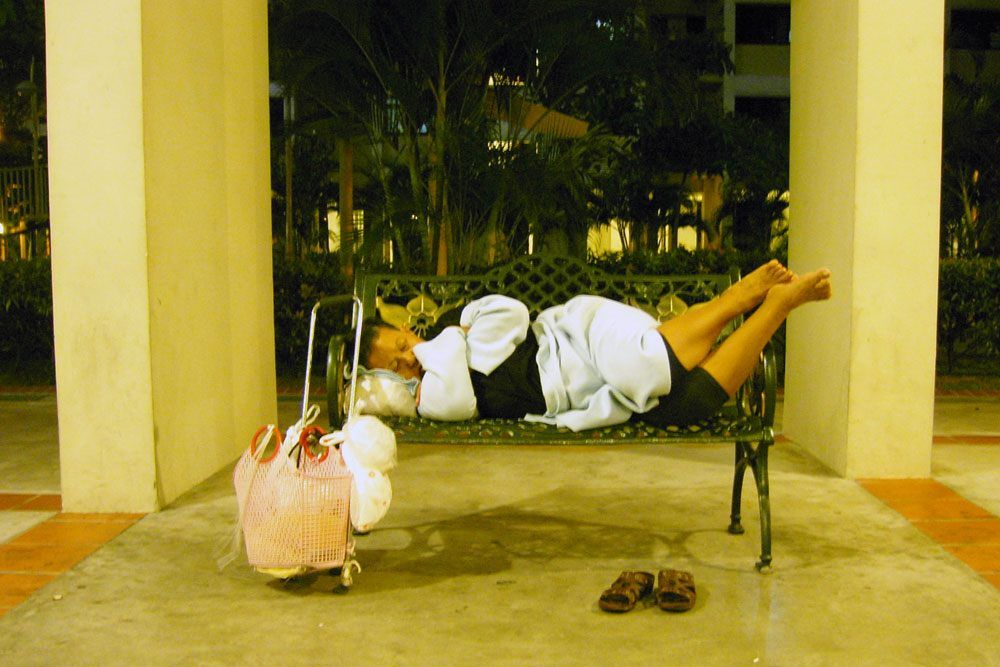
 An important article in the Straits Times written by a Ngee Ann Poly lecturer. How long must we pretend that the needy in Singapore exist in Mars? Yes, they exist but somewhere out of MY universe. Can we really blame them for not being to find jobs or just having a general despair with their lives? What kind of imposition are we placing on other Singaporeans, instead of listening and trying to reconstruct what they actually feel, think and breathe?
How much of the $200B he get? $2?
wake up lah!
The Poor and Social Reality in Singapore
<!--/adcode-->Does it mean that because we are educated that we think that people are merely lazy? Or do we think we have done our job just because we have policies* available to help the people? It is one thing to have policies, it is another to have enough people to implement them effectively. It is one thing to be educated, it is another to think that every Singaporeans have the same opportunity as you to be educated.
As James Scott argues, I paraphase, Let’s not conflate state’s policies with the actual social reality and implementation on the ground. Wise words indeed.
Help for the poor: So close, yet so far
By Vivi Zainol, For The Straits Times
WHY do needy Singaporeans continue to fall through the cracks despite the Government’s array of public aid schemes?
To tackle this question, 18 of my students at Ngee Ann Polytechnic interviewed more than 30 low-income households for a vacation module. They found the biggest barriers to be education and language.
Many are illiterate. With little knowledge or understanding of schemes to help them, it’s not surprising that some say they know the Government is helping them, but they feel it is not doing enough.
Some would rather get an extra job than ask for help. Others struggle to make themselves understood and say they do not have the time, money or energy to make return trips to their MP or Community Development Councils (CDCs) to ask for more help.
For those who did bother, a common complaint heard by students was that the CDC officers are rude.
Several years ago, as a Straits Times community reporter, I had heard the same comment when I asked a woman with three children, and whose husband was in jail for a drug offence, why she did not ask for help. Describing how her experience with CDCs turned her off, she said a CDC officer had sarcastically asked her: ‘Didn’t your husband leave you any money?’
‘If he had, why would I be asking for help?’ said the troubled woman, who had contemplated suicide.
One group of Ngee Ann students decided to observe CDC officers in action after receiving the feedback. At one CDC, officers were unfailingly polite - it was the low-income group which was being demanding and uncooperative. However, all the CDC officers were Chinese - help-seekers speaking Malay and Indian had to struggle to make themselves understood.
At another CDC, student Nurlina Fatima Shafrin, 18, recalled how a CDC officer was heard commenting loudly to another officer nearby on how ‘irritating’ the people who had come to ask for help were, even when the latter, who were filling up forms, could hear them.
What is interesting to note is that interviews by students uncovered a perception among low-income earners that the higher-educated tend to look down on them and are arrogant. Formally attired CDC officers also unintentionally give the impression that they are less approachable.
Not all CDC officers are trained social workers - there are not enough social workers to go around in Singapore.
Also, some members of the low-income group can be downright prickly, believing they have a right to receive handouts from the state.
But surely everybody deserves good customer service regardless of income group? The poor have their pride too.
Could CDCs perhaps train their staff to understand the sensitivities and psyche of the lower-income group? Steps could also be taken to ensure that staff on duty speak different languages and dialects. Members from the low-income group could even be employed to help.
It’s good news indeed to hear that the Government has raised public assistance spending from $96 million to $140 million, and ComCare funding from $43 million to $67 million. With that much money allocated to the needy, it makes sense to ensure these funds reach the ones who need immediate assistance.
Take Mr Ramasamy Ratran, a 52-year-old Indian man, who was a pitiful sight when my students and I chanced upon him. He was lying on the dusty floor in his rented two-room flat, having been discharged from hospital just two weeks earlier.
Fortunately, a former female neighbour and a male friend had taken it upon themselves to look after Mr Ramasamy, who is epileptic and living on his own. Medical social workers had settled his hospital bills, but he was getting no financial help while he was recuperating and unable to work.
‘Can you please help him? He needs help. When I first came two weeks ago, there was no electricity. His flat was in total darkness,’ pleaded the former neighbour, who had helped to top up his prepaid utilities smart key to get the electricity back on.
Mr Ramasamy was not the only one my students and I found in need of assistance. When barber Yahya Pinghani, 39, was hospitalised for a kidney problem, he could not work and had no daily income for weeks. His children skipped school that week because there was no money for the bus fare.
Mr Pinghani’s wife Murni, 41, complained how, after three weeks, her single friend who had applied for help with her at a CDC had already received assistance while she and her family were still waiting. She revealed that her family owed a whopping $4,000 in utilities bills.
CDCs do give $200 once-off emergency assistance, after which the needy wait six to eight weeks for CDCs to respond. So what do they do when help is a long time coming? Many see their MPs, getting a $50 cheque for their trouble, or resort to collecting food from voluntary welfare organisations. How many know that they can get immediate assistance from your Citizens Consultative Committee? I did not either, for that matter, till I asked around.
Perhaps it is time that bulletin boards in HDB flats were put to better use. They could advertise where the poor can get help and give details of the schemes. Many low-income earners are illiterate, but the ones who are not will surely help to spread the word around.
It could also be made mandatory for medical social workers in hospitals to inform social workers or CDCs when a person who is from the low-income group is discharged so they will give him temporary financial assistance during his recovery period.
Last year, the Ministry of Community Development, Youth and Sports (MCYS) set up a community care network for the elderly in Ang Mo Kio. Under this scheme, grassroots leaders are trained by family service centres to identify needy households.
Perhaps if this outreach scheme is formally extended to include all needy Singaporeans, not just the elderly, it could be used to ensure no one falls through the cracks and to explain the help schemes available to the needy.
MCYS minister Vivian Balakrishnan recently called on Singaporeans to be eyes and ears on the ground, saying ‘we need the whole of society’ and not ‘an army of bureaucratic civil servants’, when he outlined $140 million worth of initiatives for the low-income group.
The findings of the 18 Ngee Ann polytechnic students who ventured out of their classroom may not be conclusive, but simple observations like theirs should not be belittled. Like any jigsaw puzzle enthusiast will tell you, even one small piece makes a difference.
The writer is a lecturer at the School of Interdisciplinary Studies at Ngee Ann Polytechnic.
-
Hi Sg Ty,
I need repeat u are right that M777 is heli--transportable.
@@@@@@@@@@
Reserve Bank can not help too long.
oz commercial banks borrow short funds and lend long to clients.
Also ,they rely heavily on foreign currrency to enjoy
the cheaper interest rates,like Yen.
But this biz model cannot work any more.
u can see from the graph that now, they can borrow Oz dollars only.
But no worry.RBA comes to rescue.
But how long can RBA provides funds to the banks?
m
November 2008 Statement on Monetary Policy or PDF 770K
Graph 61: Five Largest Banks’ Bond Issuance
http://www.rba.gov.au/PublicationsAndResearch/StatementsOnMonetaryPolicy/Nov2008/list_of_graphs.html
m,mm
-
Do u know the oz gavaman's gurantee on banks' wholesale
and retail deposits are not legalised?
What will happen if any banks go bankcrupt before the law is passed?
If the chance is remote,then no need to make the gurantee lah.
I am wandering if there are any laws in Oz.
Have they read the books before they do anythings?
the utmost important is if somethings happen,
where is the money?
Oz gavaman is not famous for cash rich.Right,mates?
SHOW ME THE MONEY!!BTW,where is the fund,lets say
100b,part of oz banks deposit 700billions?
How much oz's cash or cash convertible in hand???
Pl dunt count CDO,CDS etc ,those stuff is very hard to guess the value
and not so marketable,if not imposible to sell!!
Legislation to fund bank guarantee
Samantha Maiden, Online political editor WAYNE Swan has bowed to pressure to introduce legislation for a standing appropriation to fund the bank deposit guarantee.
The move follows concerns ratings agencies would not be satisfied the government guarantee of a bank deposits and the wholesale guarantee could be honoured in a timely fashion.
Mr Swan has told Labor MPs this morning that it was unlikely any Australian banks would go under and the guarantee would be called on but that the appropriation legislation would be passed nonetheless.
He said Treasury described the threat as remote and unquantifiable.....end of quote@@@@@@@@@@@@@@Pl forgive me to show the right model at door step.SG gavamna asked for the approval of SG President to release150 billions just in case.The money is already on the vault!!President is the guradian,holding the second key, of the reserve.The most important is money alreday set aside and is sitting inside thevault,just in case.This is the main difference of have and have not.mmm
-
USA bail out banks.U know.
UK bail out.u know.
Oz bail out banks.Wow.U sure dunt know.
western medias just blind!!
AOFM Makes First Two Investments in RMBS
17/11/2008Treasurer---Press Release or this link
http://www.treasurer.gov.au/DisplayDocs.aspx?doc=pressreleases/2008/130.htm&pageID=003&min=wms&Year=&DocType=0

AOFM Makes First Two Investments in RMBS
I welcome the first two investments by the Australia Office of Financial Management (AOFM) in Residential Mortgage Backed Securities (RMBS) under the Government's initiative to invest $8 billion in RMBS.
These investments are part of the Government's commitment to strong and effective competition in Australia's mortgage markets.
The Rudd Government is committed to ensuring that Australia's financial system provides Australian households with a wide range of financial products at competitive prices.
In September I announced that the Government would invest in RMBS to support competition in lending for housing. The first two such investments have now been agreed and priced.
The completion of these two issues will help reinvigorate the RMBS market in Australia and contribute to competition in home lending.
I am particularly pleased that other investors have been encouraged to participate in them, thereby adding to the total funds that will be available for new housing mortgages.
Agreement was reached late on Friday for an issue of $600 million of RMBS by FirstMac Limited, with the ANZ Bank, HSBC and Macquarie Bank as arrangers.
Agreement was reached today for a second issue of RMBS, also of $600 million, by Members Equity Bank, with Westpac and Credit Suisse as arrangers.
The AOFM is participating in each as a cornerstone investor and is contributing around $500 million to each.
The AOFM has also announced today two further mandates that it is providing for additional RMBS issues.
These mandates are for issues by Challenger Mortgage Management and RESIMAC Limited. It is expected that these issues will be priced and placed during December.
CANBERRA
17 November 2008--end quoteHow much they need to save the banks!
do u believe--
These investments are part of the Government's commitment to strong and effective competition in Australia's mortgage markets.
IT IS BAILOUT!!
Gavaman is using taxpayers money to exchange for trash!!
Why no one in the market to buy these Residential Mortgage Backed Securities?
Tainted.U know.Mates?
bbbb